remote control excavator
A remote control excavator is a specialized construction machine that can be operated from a safe distance using a wireless control system instead of requiring an operator to sit inside the cab. This innovative equipment combines the power of a traditional excavator with advanced remote-control technology, making it an ideal solution for hazardous environments and challenging job sites. As construction and industrial sectors continue to embrace automation, the remote control excavator has become an increasingly valuable asset for projects where safety, precision, and efficiency are top priorities.
Unlike conventional excavators, a remote control excavator allows the operator to stand at a secure location while controlling every movement of the machine. The wireless controller communicates with the excavator through reliable radio signals, enabling the operator to manage digging, lifting, trenching, demolition, and material handling with remarkable accuracy. Modern systems are designed to provide responsive controls, giving operators confidence even when working in demanding conditions.
One of the biggest advantages of using a remote control excavator is the significant improvement in workplace safety. Construction sites often expose workers to dangerous conditions such as unstable ground, landslides, contaminated environments, flooded areas, or demolition zones. By allowing operators to remain at a safe distance, the risk of injury is greatly reduced while maintaining full control of the equipment. This makes remote-operated machinery particularly useful in disaster recovery operations, mining, tunneling, and industrial demolition projects.
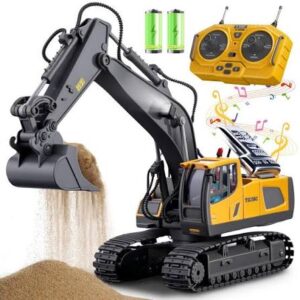
The technology behind a remote control excavator has evolved considerably over the years. Advanced wireless communication systems ensure stable connectivity even over long distances, while built-in cameras and sensors provide operators with clear visibility of the work area. Some machines also feature multiple camera angles, real-time video transmission, and obstacle detection systems that improve both safety and operational precision. These technological enhancements help operators perform complex tasks with greater confidence and efficiency.
Another reason why businesses are investing in a remote control excavator is the increased productivity it offers. Since operators are not confined to the machine’s cabin, they can choose positions that provide better visibility of the worksite. Improved visibility often results in more accurate digging, reduced material waste, and faster project completion. Additionally, operators can quickly relocate to safer positions without stopping operations, minimizing downtime and enhancing overall workflow.
What is a remote control excavator?
The remote control excavator is widely used across numerous industries beyond traditional construction. Mining companies rely on remotely operated excavators to work in unstable or hazardous areas where human presence would be risky. Utility contractors use them for excavation near underground pipelines and electrical infrastructure. Environmental cleanup projects also benefit from remote operation when dealing with contaminated soil or hazardous waste. These diverse applications demonstrate the versatility of remote-controlled excavation technology in modern industries.
Maintenance remains an important aspect of ensuring the reliable performance of a remote control excavator. Regular inspections of hydraulic systems, wireless communication equipment, batteries, sensors, and control units help maintain operational efficiency and reduce the likelihood of unexpected breakdowns. Proper maintenance not only extends the lifespan of the equipment but also ensures that safety systems continue to function as intended during critical operations.
Many manufacturers continue to integrate intelligent features into every new remote control excavator. Some models include semi-autonomous functions that assist operators with repetitive tasks, while others incorporate GPS guidance, automated grading systems, and advanced diagnostics. These innovations reduce operator fatigue, improve consistency, and help construction companies achieve higher levels of accuracy on complex projects. As digital technologies continue to evolve, remote-controlled excavators are expected to become even smarter and more capable.
Although the initial investment in a remote control excavator may be higher than purchasing a standard excavator, many organizations find that the long-term benefits justify the cost. Reduced workplace accidents, lower insurance expenses, increased productivity, and improved project efficiency all contribute to a strong return on investment. Companies that frequently work in hazardous environments often consider remote-controlled equipment an essential part of their safety strategy rather than simply an optional upgrade.
Training plays a crucial role in maximizing the effectiveness of a remote control excavator. Operators must become familiar with wireless control systems, camera views, emergency stop functions, and communication protocols before operating the equipment on active job sites. Fortunately, many manufacturers provide comprehensive training programs that help operators quickly develop the necessary skills. With proper instruction, experienced excavator operators can often adapt to remote-controlled systems with relative ease.
As industries continue to prioritize worker safety and technological innovation, the demand for the remote control excavator is expected to grow steadily. Advances in artificial intelligence, machine vision, and wireless connectivity will likely introduce even more sophisticated capabilities in the coming years. Future models may offer enhanced automation, predictive maintenance, and improved remote collaboration, allowing operators to manage heavy equipment with greater efficiency than ever before. Whether used for construction, mining, demolition, infrastructure development, or emergency response, the remote control excavator represents a significant advancement in heavy machinery technology, offering a practical combination of safety, precision, and operational excellence for modern work environments.
